Renewable Diesel
Sustainable, Non-Fossil Fuel

A Seamless Transition
Renewable diesel (RD) is a lower-carbon alternative to conventional petroleum diesel, supplied by Sprague for commercial, industrial, municipal, fleet, marine, and other diesel-powered operations across select Northeast markets. Available through wholesale and delivered fuel services, renewable diesel provides businesses with an option to reduce their carbon footprint while maintaining reliable diesel performance.
Produced from renewable feedstocks, renewable diesel has a chemical composition similar to conventional petroleum diesel. It meets ASTM D975 specifications and can be used as a drop-in fuel in compatible existing diesel engines and infrastructure.
Sprague's renewable diesel offering includes R99, a fuel containing approximately 99% renewable diesel. R99 provides a high concentration of renewable fuel while maintaining many of the performance characteristics businesses expect from conventional diesel.
Unlike biodiesel, renewable diesel is a hydrocarbon fuel rather than a fatty acid methyl ester (FAME) based fuel. For a deeper look at the differences, read Renewable Diesel vs. Biodiesel: What's the Difference?
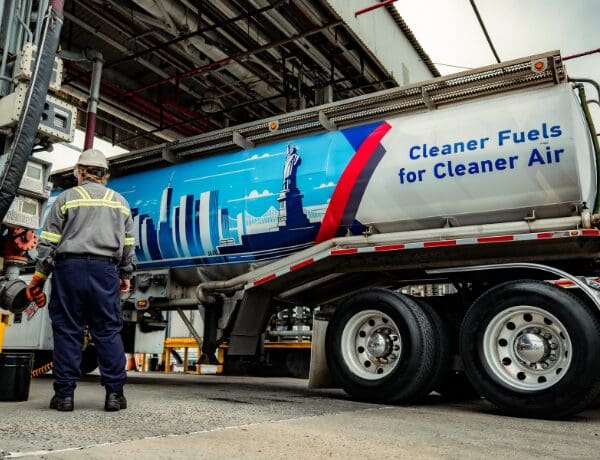

Up to 75% Emissions Reduction:
Lifecycle greenhouse gas (GHG) reductions compared to fossil fuel diesel

Improved Air Quality:
Lower particulate matter and NOx emissions resulting in reduced air pollution

100% Sustainably Sourced:
Produced from renewable feedstocks such as used cooking oil, fats, and soybean oil

100% Compatible Drop-In Solution:
Meets ASTM D-975 specifications, requires no blending
Renewable Diesel Supply and Availability
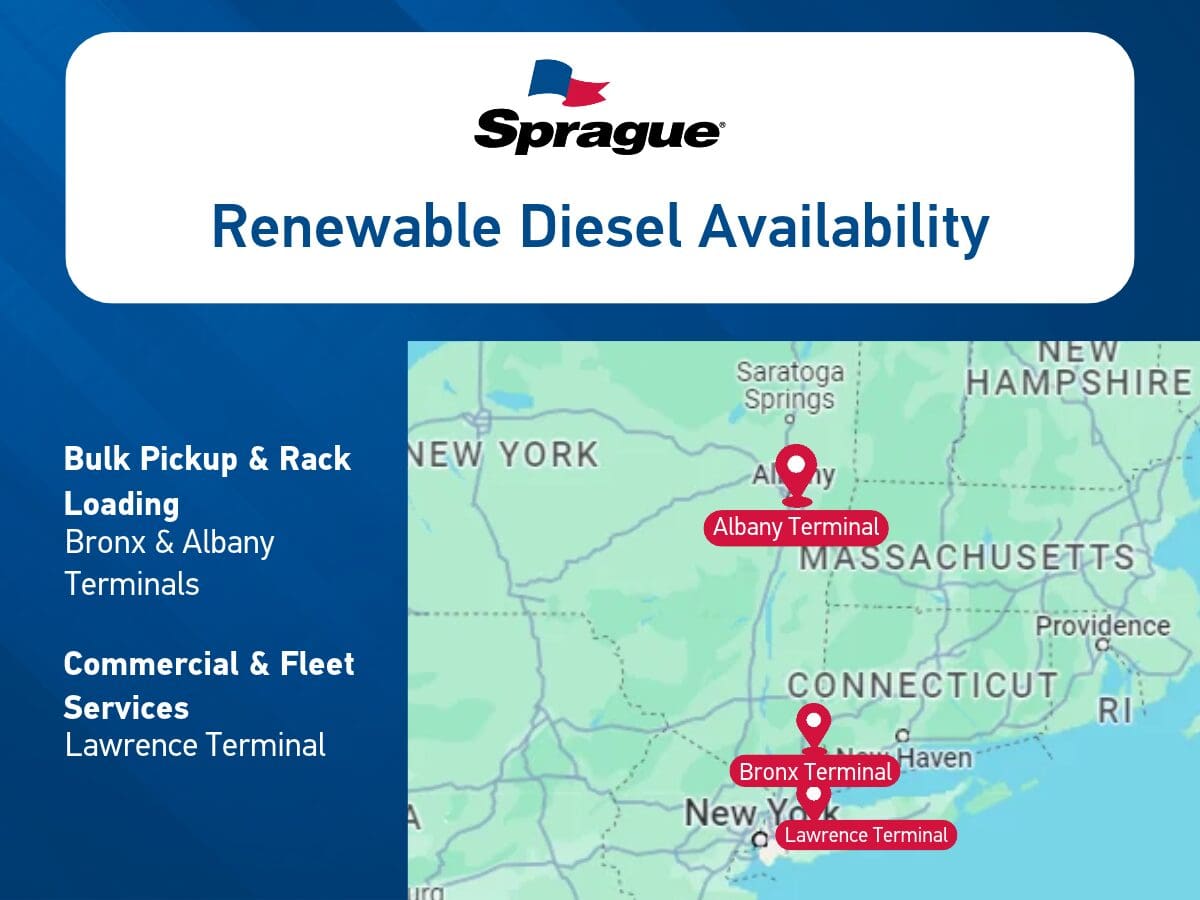
Sprague offers renewable diesel through wholesale, delivered, commercial, and fleet supply options across select Northeast markets.
Renewable diesel is available for rack loading and delivery through select Sprague terminals, with additional commercial, fleet, and retail availability in certain markets.
Availability varies by location and supply needs. Contact our team for current Renewable Diesel availability in your area.
Why Use Renewable Diesel?
Renewable diesel provides a lower-carbon, drop-in fuel option for businesses that rely on diesel-powered equipment. Because it meets ASTM D975 specifications, it can generally be used in compatible existing diesel engines and infrastructure while helping reduce lifecycle greenhouse gas emissions compared with conventional petroleum diesel.
Renewable diesel can support a variety of applications, including commercial and industrial fleets, municipal and government fleets, heavy-duty vehicles and equipment, and marine operations, helping organizations incorporate renewable fuel while maintaining operational continuity.
Engine Benefits
- Aromatic-free is less harmful to employees, handlers & environment
- High flash point improves safety for fueling operations and maintenance, and meets marine regulations
- 33% less soot to plug DPF’s and reduce fuel economy
- Reduced injector deposits
- Maintenance costs and intervals may be reduced
Operational Continuity
- Offers similar low risk of water absorption and microbial growth as fossil diesel
- Good oxidative stability = long shelf life
- Minimal to zero risk of filter blocking
- Non-polar, will not clean out debris in older fuel tanks
Renewable Diesel Supply and Availability
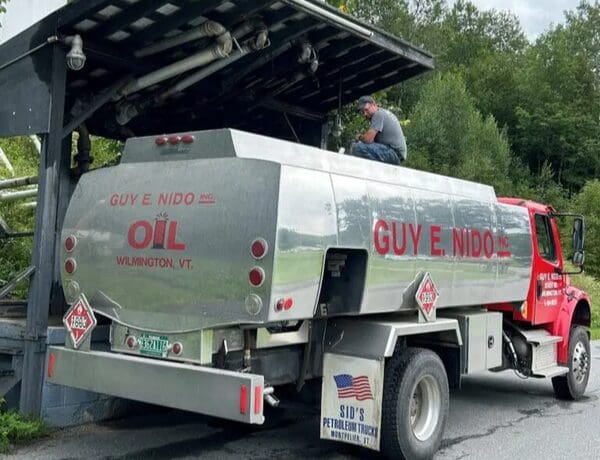
Guy Nido Inc., a family-owned Vermont business and longtime Sprague customer, incorporated renewable diesel into its existing operations as part of its commitment to renewable fuel and sustainability.
The company's experience demonstrates how a commercial operation can transition to renewable diesel while continuing to use compatible existing diesel-powered equipment and infrastructure.
“I immediately liked the idea of it,” said Guy Nido Inc. owner, Greg Nido. “All the specs and standards are the same, and it's better for the environment and better for the world.”
Learn More About Fueling Sustainably
Check out our latest press releases about renewable diesel




Frequently Asked Questions
How does renewable diesel meet emission reduction goals?
Renewable diesel is an advanced, low carbon, ultra-low sulfur drop-in fuel replacement designed to significantly reduce emissions. It can help to decrease your emissions by at least 50%*
What is the difference between biofuel and renewable fuel?
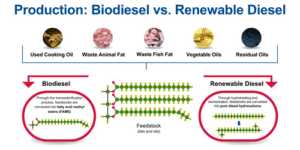
Biodiesel:
Through the transesterification process, feedstocks are converted into fatty acid methyl esters (FAME)
Renewable Diesel:
Through hydrotreating and isomerization, feedstocks are converted into pure diesel hydrocarbons
Associez-vous à Kildair
At Sprague, we understand the importance of finding energy strategies and services that fit your needs. Our account managers are experienced and local, offering deep insights and industry knowledge. Contact us today to see how we can make a difference for your business.
Veuillez prendre note que pour le moment Kildair dessert uniquement les entreprises