
When comparing renewable diesel vs. biodiesel, both are lower-carbon fuels made from renewable feedstocks, but they are not the same fuel. The primary difference is how they are produced and their resulting chemical properties.
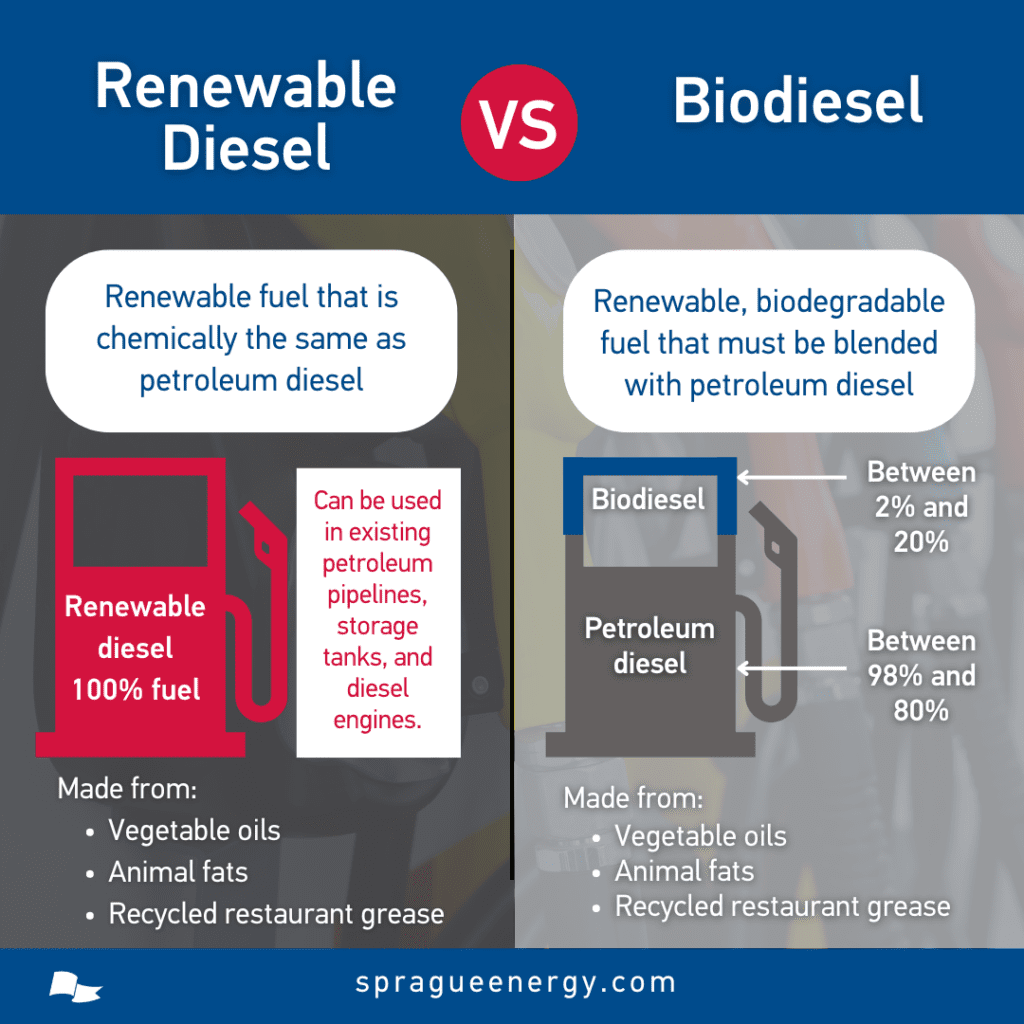
Renewable Diesel is produced through processes such as hydrotreating that convert renewable feedstocks into hydrocarbons similar to those found in conventional petroleum diesel. It meets ASTM D975 specifications and can be used as a drop-in fuel in compatible diesel engines.
Biodiesel is produced through a process called transesterification, which converts renewable feedstocks into fatty acid methyl esters (FAME). It meets ASTM D6751 specifications and is commonly blended with conventional diesel in blends such as B5 and B20.
Understanding the differences between Renewable Diesel, biodiesel, and conventional diesel can help businesses determine which fuel best fits their equipment, operations, sustainability goals, and local requirements.
Renewable Diesel vs Biodiesel vs Conventional Diesel
While renewable diesel and biodiesel can be made from similar renewable feedstocks, they differ from each other and from conventional diesel in several important ways.
| Renewable Diesel | Biodiesel | Conventional Diesel | |
| Feedstock | Renewable fats, oils, and greases | Renewable fats, oils, and greases | Crude petroleum |
| Production Method | Hydrotreating and other refining processes | Transesterification | Petroleum refining |
| ASTM Specification | ASTM D975 | ASTM D6751 | ASTM D975 |
| Common Terminology | R99, R100 | B5, B20, B100 | ULSD / diesel |
| Typically Blended? | Can be used neat or blended | Commonly blended with diesel | No renewable blend required |
| Existing Diesel Equipment | Generally compatible | Compatibility can depend on blend and equipment | Yes |
| Infrastructure | Generally works within existing diesel infrastructure | Considerations can vary by blend level and application | Existing diesel infrastructure |
| Common Applications | Fleets, heavy-duty vehicles, transportation, and commercial operations | Transportation, fleets, and heating applications | Transportation, fleets, equipment, and other diesel applications |
What Is Renewable Diesel?
Renewable diesel is an advanced lower-carbon liquid fuel produced from renewable feedstocks such as used cooking oils, vegetable oils, and fats.
Renewable Diesel production uses processes such as hydrotreating and isomerization to convert these feedstocks into hydrocarbons similar to those found in conventional petroleum diesel. Unlike biodiesel, Renewable Diesel meets ASTM D975, the same specification used for conventional diesel fuel.
What Are the Benefits of Renewable Diesel?
One of the primary benefits of Renewable Diesel is its ability to function as a drop-in fuel. It can be used at high concentrations, including R99 and R100, without requiring blending with conventional diesel.
Renewable Diesel also offers a high cetane rating and can provide lower lifecycle greenhouse gas emissions compared with conventional petroleum diesel. Because it is a hydrocarbon fuel, it can generally work within existing diesel infrastructure and compatible diesel-powered equipment.
Can Renewable Diesel Be Used in Existing Diesel Engines?
Yes. Renewable Diesel can generally be used in existing compatible diesel engines without engine or infrastructure modifications. It can be used on its own or blended with conventional diesel depending on the fuel and application.
This makes Renewable Diesel an option for a wide range of diesel-powered operations, including commercial fleets, construction equipment, public transportation, and other heavy-duty applications.
For businesses looking to incorporate Renewable Diesel into their operations, learn more about Renewable Diesel for commercial operations, including its benefits and availability through Sprague.
What is R99 Renewable Diesel?
R99 Renewable Diesel is a fuel consisting of approximately 99% Renewable Diesel. It provides businesses with a way to incorporate a high concentration of renewable fuel while maintaining many of the performance characteristics associated with conventional diesel.
Because Renewable Diesel meets ASTM D-975 specifications, R99 can generally be used as a drop-in fuel in compatible diesel engines and infrastructure.
What Is Biodiesel?
Biodiesel is a renewable, biodegradable liquid fuel produced from renewable feedstocks such as vegetable oils, used cooking oils, and animal fats.
Through a chemical conversion process called transesterification, these feedstocks are converted into fatty acid methyl esters, also known as FAME.
Unlike Renewable Diesel, biodiesel has a different chemical composition from conventional petroleum diesel and meets ASTM D6751 specifications. Biodiesel is commonly blended with petroleum diesel, although B100 is pure biodiesel and contains no petroleum diesel.
Common biodiesel blends include:
- B2: 2% biodiesel
- B5: 5% biodiesel
- B20: 20% biodiesel
- B100: 100% biodiesel
Biodiesel blends can be used for applications ranging from diesel-powered vehicles and fleets to heating fuel. The appropriate blend can depend on the application, equipment, climate, availability, and applicable requirements.
Sprague offers commercial biofuel and biodiesel blends designed to support a variety of applications and operational needs.
Is Renewable Diesel the Same as Biodiesel?
No. Renewable Diesel and biodiesel can be made from similar renewable feedstocks, but they are chemically different fuels.
Renewable Diesel is processed into hydrocarbons similar to those found in conventional diesel, while biodiesel consists of fatty acid methyl esters (FAME).
This difference affects how the fuels are specified, blended, stored, and used. Renewable Diesel meets ASTM D975, while pure biodiesel, or B100, meets ASTM D6751.
Is Renewable Diesel the Same as Conventional Diesel?
Renewable Diesel is not the same product as conventional petroleum diesel, although both are hydrocarbon fuels that meet ASTM D975 specifications.
The primary difference is their source. Conventional diesel is produced from crude petroleum, while Renewable Diesel is produced from renewable feedstocks such as fats, oils, and greases.
Because of their similar hydrocarbon composition and shared ASTM specification, Renewable Diesel can generally be used as a drop-in alternative to conventional diesel in compatible equipment.
What Is the Difference Between Biodiesel and Conventional Diesel?
The primary difference between biodiesel and conventional diesel is their composition and source.
Conventional diesel is a petroleum-derived hydrocarbon fuel. Biodiesel is produced from renewable fats and oils and consists of fatty acid methyl esters (FAME).
Biodiesel is commonly blended with conventional diesel to create fuels such as B5 and B20. For example, B20 contains 20% biodiesel and 80% conventional diesel, while B100 consists entirely of biodiesel.
Renewable Diesel vs. Biodiesel: Key Differences
Which Fuel Is Right for Your Business?
When comparing Renewable Diesel vs biodiesel, the right choice depends on your equipment, application, fuel availability, climate, sustainability objectives, and applicable requirements.
Renewable Diesel provides a drop-in option that can generally be used at high concentrations in existing compatible diesel equipment. Biodiesel offers flexible blend options that allow businesses to incorporate varying levels of renewable content into road-diesel and heating-fuel applications.
At Sprague, we’re proud to offer a variety of renewable fuel options and customized blends to our customers. Whether Renewable Diesel or biodiesel is right for your operation, our team can help you evaluate your fuel needs as the market evolves and requirements change.
Visit our Wholesale Fuel page to explore Sprague’s fuel options and find the right solution for your business.